

KEYNOTE PRESENTERS
JENNY GROVES
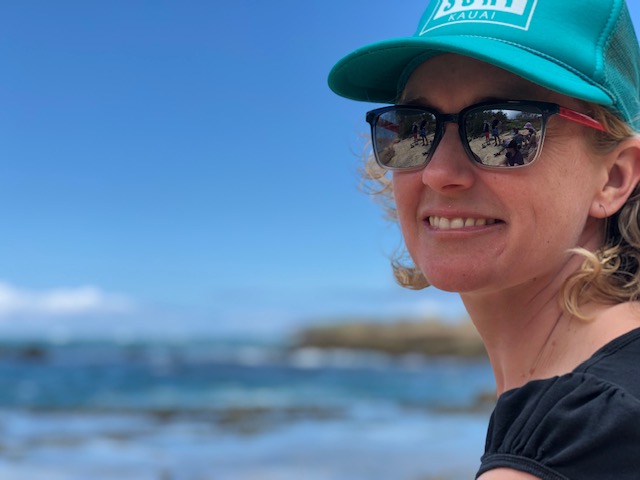
Jenny Groves is a visionary leader and educator with a deep commitment to transformative, nature and place-based learning. With a background in inclusive, global, experiential, and ecological education, Jenny has spent the last 25 years fostering learning environments that connect students to the world. As a public-school teacher, living and working on shíshálh and Sḵwx̱wú7mesh lands of the Sunshine Coast, B.C., Jenny co-created a nature-based public program that pioneered public K-7 nature-based learning program, championing land-based instruction as a powerful tool for student engagement and well-being.
Five years ago, Jenny stepped into the role of principal at Langdale Elementary, where she led a bold transformation at her school. Under her leadership, the school culture has become rooted in ecological responsibility and innovative pedagogy, with land-based learning as a cornerstone of the curriculum across all grades. Indigenous perspectives, environmental stewardship, and community connection have become a part of everyday learning for all students. Classrooms, curriculum, and school grounds continue to be decolonized and reshaped toward an education that offers more authentic, hands-on, inquiry-based learning for the students, staff and families.
Alongside teaching and leading in the public school system, Jenny has held positions in teacher education through Simon Fraser University. As an adjunct professor, she taught Nature-Based and Experiential Learning to multiple cohorts of graduate students. Jenny knows this is a crucial time for both education and the planet – one that calls for radical rethinking of how we teach, learn, and live in relationship with the land. Her work continues to inspire educators to reimagine what school can be when rooted in relationship, place, and purpose.
Jenny holds a Bachelor’s degree in Outdoor Recreation, Parks and Tourism from Lakehead University, an Education degree in Outdoor Experiential Education from Queen’s University, a Graduate Diploma in Nature-Based and Experiential Learning from Simon Fraser University, and a Masters of Education in Creativity, Sustainability and Innovation from Cape Breton University. Her studies have informed her work as a teacher and school leader and fostered her deep commitment to reimagining education through ecological, experiential, and creative lenses.
Presentation summary:
This keynote invites educators and leaders to imagine what’s possible when schools and classrooms connect learning to land, culture, and community. Drawing on the transformation at a school on the Sḵwx̱wú7mesh lands of the Sunshine Coast, B.C., I’ll share how we moved from traditional practices of public education to a whole-school model of land-based learning through visioning, capacity-building, and structural redesign.
At the classroom level, we’ll explore how teachers can challenge entrenched routines and create vibrant, responsive spaces by embedding seasonal rhythms, collaborating across disciplines and classrooms, and building relationships with local Indigenous communities. This is not about new mandates or buildings—it’s about courage, curiosity, and commitment to change. Together, we’ll consider how this approach can spark innovation anywhere, turning education into a force for belonging, sustainability, and hope.
CRAIG MACDONALD
Craig Macdonald was born in Markham Ontario in 1946 and was educated in Toronto and Guelph. He holds a Master’s degree in Fisheries. His research centred on Gobidae and was jointly funded by California Fish and Game and the US Navy, and was conducted in the US Naval Weapons Station, Seal Beach, California. This work resulted in two scientific publications. In 1972, Craig returned to Ontario and joined the Ontario Ministry of Natural Resources, where he worked for 43 years. He was co-author of the Canoe Routes of Ontario for the Ontario Government, in addition to many other Ontario Government publications. He worked out of Richmond Hill, Queens Park, Huntsville, the Leslie M. Frost Natural Resources Centre, Bracebridge, and Algonquin Provincial Park. He was senior author of the Frost Centre Map – the first map ever to document the inter-relationship of traditional snowshoe trails and canoe portages. Craig supplied most of the field information for the modern Algonquin Park Map in 1975. However, he is most well known as author of the Historical Map of Temagami. Based on his archival research and interviews with native elders during the 1960s, 70s, and 80s, this map documents 1,200 portages, 75 snowshoe trails, 600 native names for lakes, and other important geographic features. James Raffan has written a book about Craig’s work on this map. Entitled Echo Maker, it was published last October by Dundurn Press. In June of last year Craig authored Traditional Sledding in North America, published by the Canadian Canoe Museum. This 300 page book contains 400 line illustrations all hand drawn by the author. Craig has spend almost his entire career working in the woods. He is an avid canoeist and has logged well over 1,000 miles of snowshoe travel. Craig has a 150 pair collection of native-made snowshoes from all over North America. Craig and his wife Doris have three children and seven grandchildren.
Presentation summary:
I will be talking about the Temagami Historical Map Project, and how it changed our understanding of traditional native travel methods in Canada.